Mostrar mensagens com a etiqueta Astronautas. Mostrar todas as mensagens

sexta-feira, 28 de novembro de 2008

O momento em que se perdeu um saco de ferramentas em órbita

Foi mesmo um daqueles acidentes que só acontecem porque as pessoas estão habituadas a porem coisas de lado e elas não fugirem. Infelizmente, no Espaço, é diferente. Heide Piper, astronauta da missão STS 126, neste momento ainda em órbita, teve de limpar o interior de um saco de equipamento, por ter escapado óleo de uma ou mais das pistolas que seriam utilizadas para lubrificar um dos painéis solares da Estação Espacial Internacional ISS. Ao fazê-lo teve de tirar momentaneamente um saco de ferramentas desse saco maior, e o saco escapou. Vê-se perfeitamente o momento em que a astronauta ainda tenta agarrar o saco, sem sucesso.

As ferramentas foram avaliadas em cerca de 100.000 dólares.

quarta-feira, 7 de maio de 2008

Anúncio de emprego: Procura-se Astronauta (m/f)

É mesmo verdade! Chegou finalmente a oportunidade de haver um astronauta português! Um astronauta verdadeiro, e não um turista, que tenha pago 20 ou 30 milhões de dólares para ir passear à ISS a bordo de uma cápsula Soyuz. Não, este anúncio surgiu no StarTracker, uma social network em que só se entra por convite, mas reproduzo aqui o anúncio na íntegra.

Se é jovem, saudável, em forma, e está a estudar num curso relevante, e se a Conquista do Espaço o anima, sugiro-lhe que cumpra o sonho de muitos de nós, incluindo os que, como eu, são de uma geração que já não terá esta possibilidade! Quem sabe, poderá ser o primeiro Europeu a caminhar sobre a Lua! Já não é fantasia!

Job opportunity details
Role Name: Astronauta
Company: European Space Agency
Description: A Ciência Viva e a Fundação para a Ciência e Tecnologia organizam a Sessão de Informação sobre o concurso para recrutamento de astronautas da Agência Espacial Europeia (ESA), o primeiro aberto à participação de cidadãos portugueses.

Este evento, que conta com a colaboração da ESA, terá lugar no próximo dia 15 de Maio, às 10h30, no Pavilhão do Conhecimento – Ciência Viva.

Esta sessão conta com a presença de Ernst Messerschmid, astronauta do Centro Europeu de Astronautas (EAC), de Horst Schaarschmidt, responsável pela divisão de astronautas do EAC e de Manuel Paiva, que coordenou numerosos projectos de investigação biomédica associados ao Espaço.

Com os seus astronautas a trabalharem no laboratório Columbus, a bordo da Estação Espacial Internacional (ISS), e com o sucesso da missão ATV, a Agência Espacial Europeia está à procura de novos talentos para reforçar o seu corpo de astronautas em futuras missões.

Os candidatos seleccionados passarão a integrar o Corpo Europeu de Astronautas e iniciarão a sua formação básica no Centro Europeu de Astronautas em Colónia, na Alemanha.

Portugal é um dos 17 Estados-Membros cujos cidadãos podem candidatar-se a este desafio.

Mais informações em http://www.esa.int/esaCP/SEM2SS3XQEF_Portugal_0.html
Until: 2008/08/19
Name:
Link: www.esa.int/esaCP/SEM2SS3XQEF_Portugal_0.html
Location: - Global, - Global

Sugiro também que visitem o link da ESA, que contém mais informações. Os astronautas seleccionados irão participar em missões à ISS, mas também, previsivelmente, à Lua, daqui a cerca de 10 anos!

quarta-feira, 26 de março de 2008

Procuram-se: Astronautas

Procuramos os candidatos mais brilhantes e em melhor forma física. Devem tolerar bem o trabalho sob stress e apresentar boa tolerância às alturas. Exige-se disponibilidade para trabalhar longe de casa. Se acha que está à altura deste desafio, envie o seu CV actualizado para a Agência Espacial Européia.

Este poderia ser o texto de um anúncio para um emprego qualquer. Mas na realidade a ESA - Agência Espacial Européia - está, pela primeira vez em 15 anos, a contratar astronautas. Existem 8 vagas, para as quais a ESA espera ter mais de 50.000 candidaturas!

Fonte: The Guardian


Situations vacant: applicants should be fit, fearless - and have a head for heights
Europe recruits astronauts for first time in 15 years
· Up to 50,000 applications expected for eight places

This article appeared in the Guardian on Saturday March 22 2008 on p3 of the Top stories section. It was last updated at 00:02 on March 22 2008.

Astronaut Piers J. Sellers participates in a spacewalk

Astronaut Piers J. Sellers participates in a spacewalk

Wanted for unique opportunity: brilliant, physically fit people. Must be cool under pressure, willing to work away from home and have a good head for heights. Free uniform included.

The wording might be a little different, but when the advert appears in newspapers in the next few weeks, it will mark the beginning of one of the most exciting recruitment drives in more than 40 years. The European Astronaut Centre (EAC) needs more astronauts, and from them it expects to choose the first European to walk on the moon.

The EAC, part of the European Space Agency (ESA), last went looking for astronauts 15 years ago. The recruitment comes at a time of enormous change in human space exploration. The space shuttle, until now a workhorse for transporting crews to and from the International Space Station, is due to be mothballed in 2010 or shortly after. And the lifetime of the space station itself is only guaranteed until 2015.

But the plans for humans in space suggest a new era is about to begin. Next year, Nasa plans the first test flight of its shuttle replacement, the Orion module, with which it intends to return astronauts to the moon by 2020. The ESA hopes to be there with them.

"The average age of our astronaut corps is 50 years old, and with that corps, we cannot master the challenges of the future," said Gerhard Thiele, head of the astronaut division at the EAC in Cologne. "I'd not be surprised if one of the candidates we select this time round will be among the first Europeans to walk on the moon."

Thiele, a former astronaut, is looking for four new astronauts plus four back-ups. Applications will be taken via a website, and will be followed by a year-long selection process of interviews, medicals and psychological tests. Up to 50,000 applications are expected.

"People have to be operationally very skilled and must be able to stay cool if things get tense. But what is important to me is that the person is a team player, a servant. They might seem a hero type with the 'right stuff', but they have to understand they are just one small part in the entire scenario. We need people who understand what it means to be humble," said Thiele.

Astronauts traditionally come from strong technical backgrounds, so scientists, engineers and doctors will be high on the list. Piloting skills - though not needed as Europeans are not allowed to fly the shuttle or the Russian Soyuz - are also desirable. The agency has a policy of not recruiting people older than 55, but the physical fitness required to make it through selection usually weeds out plenty of people who are much younger.

For Britons, getting into the astronaut corps is made all the harder by the government's opposition to human spaceflight. While Britain is the fourth largest contributor to ESA, paying €265m (£208m) this year alone, none of that goes towards the astronaut programme.

"To the best of my knowledge, there has never been an ESA astronaut from a country that wasn't supporting human space flight, but this should change in the future," said Thiele. "From the number of letters I get, I'd say almost half the applications will be coming from Great Britain and I can assure every British candidate we are absolutely blind to the colour of the passport during the application process."

At Britain's Empire Test Pilots' School at RAF Boscombe Down, Wiltshire, a spokesman said a shift in the government's position would quickly get people talking. "Anyone in flight test probably has, deep in their soul somewhere, an ambition that it would be a great thing to do, and historically test flying is where astronauts have been recruited.

"It's not really been a topic of conversation in this country because it's not been seen as a possibility. If things changed, we would be very surprised if it didn't become a very hot topic of conversation indeed," he said.

The government recently published its space strategy for the next five years, and announced that it would review its position on human space flight.

domingo, 10 de fevereiro de 2008

Doença no espaço adia a montagem do módulo Columbus

Há um astronauta doente a bordo da Estação Espacial Internacional (ISS). Ontem foram pedidas teleconferências com pessoal médico em terra, cujo conteúdo, como seria de esperar, não foi divulgado. Apenas foi dito que não se trata de nada que ponha a vida de alguém em risco. Também não foi divulgado o nome do astronauta afectado, embora um controlador de vôo europeu tenha confirmado hoje que se tratava do alemão Hans Schlegel.

A equipa que iria começar a montagem do Columbus foi alterada, porque o Schlegel fazia parte dessa equipa.

Poderá não ser nada de grave, a maioria dos astronautas sofre indisposições de maior ou menor gravidade quando entram num ambiente de gravidade zero, aguardemos eventuais informações futuras.

Fontes:
  • Email da CBS Space News
  • MSNBC

CBS Space News

5:20 PM, 2/9/08, Update: Spacewalk delayed 24 hours by crew medical issue; Schlegel to be replaced by Love on first spacewalk; Shannon confirms mission extension, refuses to discuss reasons for delay

In a surprise announcement, flight controllers today told the shuttle-station astronauts shortly after Atlantis docked with the lab complex to delay a planned Sunday spacewalk - and installation of the new Columbus research module - by 24 hours, extending Atlantis' mission by one day because of a crew medical issue.

German astronaut Hans Schlegel, originally scheduled to join Rex Walheim for the first of three spacewalks planned for the mission, will be replaced by astronaut Stan Love when the module is attached on Monday. No reason was given for the delay and astronaut swap, but the shuttle crew requested two private medical conferences with flight surgeons earlier today.

NASA does not discuss astronaut health issues, citing concern about medical privacy issues, and John Shannon, chairman of NASA's Mission Management Team, refused to provide any details at an afternoon briefing.

"It's not life threatening," Shannon said, refusing to identify which astronaut was involved.

The shuttle docked with the space station at 12:17 p.m. but because of technical issues, only a few minutes of live video were downlinked. Late today, the astronauts replayed videotape showing the shuttle crew entering the station and Schlegel did not show any clear signs of discomfort.

"There was a medical issue with the crew," Shannon said during his briefing. "The flight surgeons - of course, we have flight surgeons who are closely involved with the crew at all times, they do private medical conferences with the crew throughout the mission - the crew called down and asked for one during the rendezvous, which was a little bit of a surprise to us. They talked to the crew members, they understood what the issue was. I will just say it is not going to impact any of the objectives of this mission."

But it will have a mission impact. The first of the three spacewalks planned for Atlantis' mission, originally scheduled for Sunday by Walheim and Schlegel, was devoted to helping attach the European Space Agency's Columbus research lab to the station. That work now will be delayed one day and Love, who is not believed to have trained as extensively for the work as Schlegel, will assist Walheim. Love already planned to join Walheim for the mission's third spacewalk.

Citing medical privacy concerns, Shannon repeatedly refused to answer any questions about the nature of the medical issue, including whether the astronauts face any sort of contagious threat or whether Schlegel might be available for the second spacewalk of the mission, now targeted for Wednesday.

"You guys can fish all day, but I won't bite," Shannon said.

But about half the men and women who fly in space suffer nausea and other vestibular problems known collectively as space adaptation syndrome. But those symptoms typically go away by the second or third day of a mission as the astronaut becomes accustomed to the effects of weightlessness. Whether Schlegel, a 57-year-old German and father of seven making his second shuttle flight, was suffering from SAS was not known.

There are at least two prior cases of crew illness interferring with a U.S. spacewalk. During Apollo 9, a shakedown flight for NASA's lunar lander, Rusty Schweickart became ill in orbit, forcing a one-day delay for a planned spacewalk. An EVA planned for the fifth shuttle mission was called off because of a crew health issue.

Shannon said astronaut Leland Melvin, making his first flight, is the designated crew medical officer on board Atlantis and as such is "experienced in a variety of medical procedures. We carry a kit on board that has several different types of medicines and different medical capabilities and the crew is in constant contact with the flight surgeons on the ground. The flight surgeons know all about each crew members' medical history. It's something that's very well prepared for."

Shannon said Atlantis has plenty of supplies to support the one-day mission extension and, with additional power downs ordered late today, probably enough for a second day. NASA went into the flight planning to extend it by one day anyway to give the astronauts more time to activate the Columbus module.

The undisclosed medical issue "will cause us to re-arrange a few activities," Shannon said. "I think you heard it called up to the crew a little bit earlier that we're going to delay EVA number one by one day and it will be executed on flight day five. They also called up that Stan Love will replace Hans Schlegel as an EVA crew member.

"Stan has practiced all the activities of EVA-1 extensively and we talked it over with the crew and they're very happy with that and that's how we're going to go execute it," Shannon said. "So no impacts to the mission objectives, we just need to re-arrange some of the crew activities and when they happen. You might remember we went into this flight with one additional day we could add to it and we are very close to having a second day based on how we use the cryogenic consumables that produce electricity.

"We asked the team, since we are essentially going to use that one extension day tomorrow as a day for the team to prepare for EVA number one, we asked the team to power down the orbiter just a little bit more than they had planned pre flight to make sure we can get that second additional extension day. We have not decided to add that, but we're preserving the option to add it later on. If we don't add it, then that will just be more oxygen we can transfer over to the international space station."

Otherwise, Shannon said Atlantis is in good condition and that so far, no major problems have emerged during analysis of ascent and on-orbit photography of the shuttle's protective heat shield.

A small corner of one insulation blanket midway back on the shuttle's right side orbital maneuvering system rocket pod is pulled up and under study, but Shannon said it did not appear to be a serious problem

"Nobody is very excited about this one," he said. "It is in a much different position (than a blanket that was repaired on Atlantis' last flight). ... This is really shadowed by the pod, it's also shadowed by the wing. It does not see a very significant thermal environment. I don't expect this to be an issue but the team will continue to work it."

The only other issue of any significance involves one of Atlantis' flight computers, general purpose computer No. 3. GPC-3 failed to properly transition from "standby" to "run" when the astronauts powered up the full redundant set as part of their normal rendezvous procedures earlier today. Engineers believe the computer is healthy, Shannon said, but troubleshooting was deferred until after docking.

Shannon said engineers plan to read out the computer's memory to verify no hardware problems exist and then they will re-load flight software and in all likelihood, "it'll be just as good as new."

Flight planners are in the process of developing an alternate flight plan for Sunday. A revised NASA television schedule will be posted as soon as it becomes available.


MSNBC

Astronaut illness forces delay in spacewalk
Shuttle delivers $2 billion lab to station; installation put off an extra day
The Associated Press
updated 8:42 a.m. ET Feb. 10, 2008

HOUSTON - The astronauts aboard the linked shuttle and space station geared up to inspect a damaged thermal blanket on Atlantis on Sunday after their main job — installing the Columbus lab — was delayed a day because of a crew medical problem.

German astronaut Hans Schlegel was pulled off the first spacewalk of the mission shortly after he arrived at the international space station Saturday aboard Atlantis. Managers bumped the spacewalk and Columbus’ hookup to the space station to Monday.

NASA declined to discuss the medical problem beyond saying it was not life-threatening, but a European flight controller confirmed Sunday that Schlegel was ill.

“We’re all keeping our fingers crossed for him to get better soon,” he said.

Sunday greetings
Schlegel, 56, a two-time space flier, sounded OK on Sunday morning when he spoke to Mission Control after waking up to music from fellow German Herbert Gronemeyer.

“Greetings to everybody in America, in Europe and in Germany, and especially of course to my close family and my lovely wife, Heike,” he said.

Schlegel was supposed to venture outside with American Rex Walheim on the first two of three planned spacewalks. His status on the second spacewalk, on Wednesday, was still uncertain.

The Columbus lab should have been unloaded from Atlantis and attached to the space station on Sunday, with two spacewalkers outside to help. Mission Control informed the astronauts that the installation would not take place until Monday just a few hours after the shuttle and the station joined up.

NASA said Schlegel’s shuttle crewmate, American Stanley Love, would take his place. Love trained for the work as a backup, just in case, and already was assigned to the mission’s third spacewalk, along with Walheim.

Shuttle commander Stephen Frick asked Mission Control on Sunday to clear Schlegel’s schedule the following day so he could help guide Love from inside the station.

After spending much of the morning preparing for Monday’s spacewalk, the crew will use cameras and a robotic arm to gather more images of a 1½ inch-by-1½ inch protrusion on one of the many blankets covering Atlantis’ right orbital maneuvering system pod, back near the tail.

The damage occurred during Thursday’s launch and was discovered Friday, flight director Mike Sarafin said.

Precise problem with blanket unclear
Space station flight director Ron Spencer said early Sunday that NASA did not know if the blanket was torn or if it was just sticking up a bit.

Engineers were trying to determine whether the damage posed a hazard for re-entry at flight’s end. The peeled-up section is smaller than one that required spacewalking repairs to Atlantis in June.

NASA is particularly attentive to the shuttle’s thermal shielding, ever since Columbia was destroyed during re-entry in 2003.

The delay in installing Columbus and carrying out the first spacewalk caused NASA to add a 12th day to the mission. Yet another day could be added; NASA had hoped to spend an extra day at the space station to help set up Columbus. Atlantis will remain at the orbiting complex until at least next weekend.

quinta-feira, 20 de dezembro de 2007

Mãe de astronauta a bordo da ISS falece em acidente de viação.

A mãe de um dos astronautas actualmente a bordo da Estação Espacial Internacional ISS, Dan Tani, faleceu ontem num acidente de viação.

Se a missão do Space Shuttle tivesse sido lançada como previsto, no início deste mês, Tani estaria já na Terra, mas assim terá de esperar pelo lançamento, que será em Janeiro, na melhor das hipóteses. Não há forma de o fazer regressar antes.

Uma situação difícil e inédita para um astronauta da NASA.

Fonte: Email da CBS Space News

Tani's mother killed in car-train collision

Space station astronaut Dan Tani's 90-year-old mother, Rose, was killed today when her car was struck by a train in Lombard, Ill., a suburb of Chicago, police said.

In a statement, the Lombard Police Department said a preliminary investigation showed Rose Tani went around a school bus that was stopped at a railroad crossing, "going past the downed crossing gate at which time the westbound train struck the passenger side of the vehicle."

She was transported to Good Samaritan Hospital where she was pronounced dead, police said.

Launched to the international space station aboard the shuttle Discovery Oct. 23, Dan Tani was originally scheduled to return to Earth this week aboard the shuttle Atlantis. Liftoff originally was planned for Dec. 6, which would have resulted in a landing today. But Atlantis was grounded twice by suspect fuel sensors and the flight is now on hold until Jan. 10 at the earliest.

Tani and his two station crewmates - Expedition 16 commander Peggy Whitson and flight engineer Yuri Malenchenko - can return to Earth aboard a Russian Soyuz capsule in a life-threatening emergency, but that is not an option for the death of a friend or family member.

"This is something we consider," former astronaut Jim Voss told CBS Radio. "NASA understands there is a possibility of things like this happening while someone is on orbit. And they actually get the crew member's permission to either tell them or not tell them when something happens like this."

Most astronauts, Voss said, choose to be informed.

"It's particularly difficult to have a loss like that when you're in orbit because you're kind of helpless, you can't do anything, you can't be there to be with the family, you feel very, very isolated," Voss said. "And I think for Dan, this will be just a very, very difficult thing because of the closeness of the family member and not being able to return.

"Even in the military, when people are very isolated and far away, they make every effort possible when there's a death in the family to return the service member to be back with their family. And that probably is not a possibility in this case. You just can't do that. It's something you just have to endure."

Tani has trained with Whitson and Malenchenko for years and Voss said the closeness of the crew will be a comfort.

"And of course, NASA will offer any assistance that they can," he said. "They have flight surgeons who have worked very closely with the crew and know them extremely well and they're trained to assist in cases like this. ... It'll just be a very hard time for him for a while on orbit."

Tani's father, Henry N. Tani, is deceased, according to Dan Tani's NASA biography. Rose Tani lived in Lombard. During World War 2, Tani's parents and a brother were forced to leave their home and move to a California internment camp. They were U.S. citizens, but like 100,000 other Japanese-Americans, they had no choice.

In an interview with CBS radio station WBBM-AM before Tani's launch aboard Atlantis, Rose said she was proud of her son, adding "he was lucky to be picked as an astronaut."

sexta-feira, 14 de dezembro de 2007

NASA divulga mais emails sobre o caso de Lisa Nowak

Já há algum tempo que não tínhamos notícias da astronauta Lisa Nowak, cujo julgamento continua marcado para o primeiro trimestre de 2008.

A NASA divulgou agora, de forma bastante discreta, um conjunto de cerca de 200 páginas de emails entre Bill Oefelein, Lisa Nowak e Colleen Shipman.

Fonte: ABC News


NASA Releases Documents, E-mails in Nowak Case

Arrested Ex-Astronaut Was on Good Terms With Boyfriend Days Before Her Arrest

By GINA SUNSERI

Dec. 13, 2007 - Newly released e-mails between former NASA astronauts Lisa Nowak and Bill Oefelein indicate Nowak may have been unaware that she had competition for Oefelein's affections until a few days before she confronted the other women in a Florida airport parking lot. Following the encounter Nowak was arrested and later dismissed by NASA.

The documents, which NASA posted online quietly overnight, were released 10 months after ABC News requested them under the Freedom of Information Act. NASA released e-mails between Nowak and Oefelein since 2004 and e-mails written by Oefelein to his girlfriend, Air Force Capt. Colleen Shipman. Messages that NASA deemed to be of a personal nature were excluded.

Nowak was arrested in February after allegedly confronting Shipman in Florida. Police documents say Nowak stalked Shipman at the Orlando airport and tried to get into her car, then attacked her with pepper spray. Shipman was able to drive away, and report the attack to police, who tracked down Nowak nearby and arrested her. Police didn't know until much later that she was an astronaut.

Nowak is charged with attempted kidnapping and burglary with assault which can be punishable by life in prison.

As late as Jan. 25, just a couple of weeks before Nowak's arrest on Feb. 8 in Florida, Nowak and Oefelein were still exchanging friendly e-mails and chatting about training, working out and going on bike rides together. There is no hint that she is aware of his relationship with Shipman, a woman he had met three months before while training for his shuttle mission.

In the e-mails, Oefelein asked Nowak's advice about what shirts to order for his space shuttle flight. He asked what did she think about the food he ordered to take into space during his shuttle mission? There is a lengthy discussion about whole wheat tortillas and granola bars, plus personal appearances at baseball games.

The e-mails between Nowak and Oefelein are neither romantic nor suggestive. They do portray a friendly, but on the surface, professional relationship.

When discussing a happy-hour party to celebrate a shuttle mission, Oefelein e-mailed Nowak on Wednesday Jan. 3, 2007 to ask, "Are you going to this?"

"Only if u r [sic]," she replies.

A week later, Jan. 31, Oefelein e-mailed Shipman about a junket to Alaska, his home state. The tone was more romantic.

"They want your size for the arctic gear for the snow machine outing. I think I can figure that out ... sexy and athletic," Oefelein wrote. ABC News also requested information from NASA on the space agency's policy for granting leave to its employees. And the documents they gave ABC News apparently show the agency did not have a policy about what to do if an astronaut was arrested.

NASA's leave policy covers sick leave, family responsibilities, military duty and jury duty. The policy does not contain a word about what to do if an astronaut is arrested and charged with a felony.

A month after Nowak's arrest, she was terminated as an astronaut by NASA. Months later, her former boyfriend, Oefelein was also let go. Nowak is now working on flight software for the Navy, and keeping a very low profile. She is still scheduled to go to trial in April, 2008.

The documents also detail some of NASA's response to the February attack. The day Nowak was arrested; Johnson Space Center Director Michael Coats briefed reporters on NASA's budget, but said nothing about the arrest of one of their astronauts, earlier in the day.

Behind the scenes, the NASA press office was scrambling to figure out what to do. Astronaut Steve Lindsey, who commanded Nowak's shuttle flight, flew to Orlando to see what he could do, along with shuttle pilot Chris Ferguson. Lindsey escorted Nowak back to Houston after she was released on bond.

"Steve, you are handling an incredibly difficult task very extremely well," Michael Coats wrote in an e-mail, also released by NASA "Let us know whatever you need. Thank you for a job well done."

It was important to many in the astronaut corps who wanted to make sure that one of their own was not abandoned, while they struggled to understand what happened to Lisa Nowak. Ten months later, despite the release of hundreds of pages of evidence, videotapes, photos and cell phone records, there are still more questions than answers.

During the legal proceedings since Nowak's arrest, Oefelein has made it a point to appear by Shipman's side. Nowak has been bolstered by a devoted circle of family and friends.

In the two weeks between chatty e-mails and the incident in the Orlando parking lot, Nowak separated from her husband, and discovered that she would not be assigned to a shuttle mission. The job went to someone else when colleagues said Nowak was "not a team player," according to documents released by the courts earlier this year.

Nowak has spoken publicly only once, outside the courtroom following a hearing.

"The past six months have been very difficult for me, my family, and others close to me," Nowak said. "I know that it must have been very hard for Colleen Shipman, and I would like her to know how very sorry I am about having frightened her in any way and the subsequent public harassment that has besieged all of us."

Nowak won a huge legal victory earlier this year week when Judge Marc Lubet granted motions to suppress her 72-page statement to police the night she was arrested and to toss out the evidence seized from her car.

The evidence seized from Nowak's BMW in a motel parking lot included maps to alleged victim Colleen Shipman's home, e-mails between Shipman and Oefelein, large garbage bags, latex gloves and some used diapers.

Nowak's defense team repeatedly denies she ever wore diapers to avoid stopping during her drive from Houston, but the detective who took her statement said Nowak told him she had done so.

Despite the suppression of her statement, authorities still have evidence against Nowak. At the time, she carried a duffel bag with a steel mallet, a buck knife, a BB gun resembling a 9mm handgun, gloves and six feet of rubber tubing.

sexta-feira, 9 de novembro de 2007

Mulheres, lancem-se ao espaço!

É a mensagem de Peggy A. Whitson, comandante da Estação Espacial Internacional ISS, e de Pamela Melroy, Comandante do Space Shuttle durante a sua última missão. Foi a primeira vez que o espaço foi 'comandado por mulheres'. E a nota foi alta!

Fonte: MSNBC

Female space pioneers tell girls to aim high
Women make history in orbit as young audience attends aerospace forum
By Marcia Dunn
The Associated Press
updated 4:26 p.m. ET Nov. 2, 2007

CAPE CANAVERAL, Fla. - As two women circled overhead in charge of their respective spacecraft, the first female shuttle commander, the first female space tourist and other female trailblazers gathered Friday to encourage girls to aim high.

Peggy A. Whitson, left, is the international space station's
first female skipper and Pamela Melroy is the space shuttle Discovery
commander. The joint mission marks the first time both spacecraft have been
commanded by females simultaneously.


"It's just not a crazy thing anymore to have women flying in space," said retired astronaut Eileen Collins, who commanded two shuttle flights. "It's just normal and it's accepted."

Discovery's commander, Pamela Melroy, and the international space station's first female skipper, Peggy Whitson, are the first women to be in charge of two spacecraft at the same time.

Melroy and Whitson are showing it does not matter whether someone is male or female, "it's how you do the job and your dedication to the mission," Collins said.

"I'd fly with them any day," she added.

Nearly 400 girls packed an IMAX theater at the Kennedy Space Center Visitor Complex for the pioneering women of aerospace forum, part of an expo celebrating NASA's 50th birthday in just under a year.

Joining Collins on the stage was Kathryn Sullivan, NASA's first female spacewalker; Iran-born businesswoman Anousheh Ansari, who paid a reported $20 million for a Russian rocket ride to the space station last year; the first female pilot for the Air Force Thunderbirds and the first female solo pilot for the air-demonstration squadron; and a high-ranking Federal Aviation Administration official.

Sullivan told the young audience — a sea of green vests decorated with scouting patches — to ignore the inevitable naysayers in the ever-present peanut gallery.

She recalled that when she was graduating from high school, some of her friends told her that when they were younger they would deliberately switch the conversation to baby dolls every time she mentioned airplanes.

"They thought they'd eventually get me over it," Sullivan said with a smile.

Collins said she never told anyone she wanted to be an astronaut when she was young.

"I was afraid they were going to say, 'You can't do that, you're a girl,' " she said. "So I just never told anybody and, in my own plan, I went out and did it."

The six panelists talked about how they set their sights early on, sometimes stumbled onto their interests, and overcame stereotyping and adversity. The two Thunderbird pilots, performing at the weekend expo, provided a glimpse into their jobs.

"What's really neat is in 3 1/2 hours I'm going to be going 500 mph three feet away from some other people," said Air Force Maj. Nicole Malachowski.

quarta-feira, 31 de outubro de 2007

Envie uma mensagem aos astronautas da STS-120

Vá a http://spacecenter.org/message.asp, e a sua mensagem será incluída num CD que será entregue aos astronautas da missão STS 120, após o seu regresso.

quarta-feira, 19 de setembro de 2007

NASA está a recrutar novos astronautas!

Os candidatos que forem seleccionados irão voar na próxima geração de naves espaciais da NASA, as Orion do projecto Constellation. Na altura em que entrarem no activo, o Space Shuttle já deverá ter sido desactivado, a manterem-se os planos actuais.

No grupo de astronautas que serão seleccionados poderão estar os próximos astronautas a andar na Lua, por volta de 2020. A maioria dos seleccionados poderá esperar missões à Estação Espacial Internacional.

Infelizmente este recrutamento só se aplica a cidadãos dos EUA, pelas informações de que disponho neste momento (ver ao fundo desta página http://www.nasa.gov/astronauts/recruit.html)

Link: Press Release da NASA

RELEASE: 07-196

NASA Opens Applications for New Astronaut Class

HOUSTON - NASA is accepting applications for the 2009 Astronaut Candidate Class. Those selected could fly to space for long-duration stays on the International Space Station and missions to the moon.

"We look forward to gathering applications and then being able to select from the largest pool possible," said Ellen Ochoa, NASA's chief of Flight Crew Operations at the Johnson Space Center. "Continuing our impressive record in successfully carrying out challenging human spaceflight missions depends on maintaining a talented and diverse astronaut corps."

To be considered, a bachelor's degree in engineering, science or math and three years of relevant professional experience are required. Typically, successful applicants have significant qualifications in engineering or science, or extensive experience flying high-performance jet aircraft.

Teaching experience, including work at the kindergarten through 12th grade level, is considered qualifying. Educators with the appropriate educational background are encouraged to apply.

After a six-month period of evaluation and interviews, NASA will announce final selections in early 2009. Astronaut candidates will report to Johnson in the summer of 2009 to begin the basic training program to prepare them for future spaceflight assignments.

NASA will accept applications through July 1, 2008. To apply visit:

http://www.usajobs.gov


Additional information about the Astronaut Candidate Program is available by calling the Astronaut Selection Office at 281-483-5907 or by visiting:

http://www.nasa.gov/astronauts/recruit.html


segunda-feira, 3 de setembro de 2007

Começa o 'circo' mediático à volta da ex-astronauta Lisa Nowak.

Chamo-lhe circo porque na realidade não se tratará de um julgamento, mas de mero entretenimento para as massas. O julgamento só começará realmente no final deste mês, mas em frente ao Tribunal onde este decorrerá já se juntam várias carrinhas de jornalistas, que estão a cobrir as audiências preliminares.

Tudo isto para entreter um povo que há meses não sabia nem queria saber o que Lisa Nowak tinha feito pela vida, e que agora pretende ver algo de chocante, e com o pior castigo possível, apenas para seu gáudio... Enfim, Panem et Circenses...

Desenvolvimentos ainda há poucos, à excepção de Nowak já ter sido 'libertada' do dispositivo GPS que era obrigada a usar constantemente, e ter dado uma breve conferência de imprensa na qual pedia desculpas à sua 'rival', e condenava os media pelas várias intromissões na sua vida pessoal, da sua família e vizinhos.


quinta-feira, 2 de agosto de 2007

Barbara Morgan e a NASA dos nossos dias

Barbara Morgan
Nasa's great white hope: an American tale

Both were teachers; both dreamt of flying in space. One was rejected; the other flew - and died - on the space shuttle Challenger. Now her friend is to embark on the same journey.

By Andrew Gumbel
Published: 02 August 2007

Nasa, the US space agency, has a big problem and it is hoping against hope that a 55-year-old schoolteacher called Barbara Morgan can provide the solution.

The problem is that the agency can't keep a lid on bad news. Last year, Nasa managers watched in a state of appalled horror as one of their astronauts, Lisa Nowak, embarked on an eccentric, jealousy-crazed journey halfway across the country to try to kidnap a woman she suspected of hitting on the fellow astronaut she loved.

Last week, an independent panel set up to investigate the mental health of Nasa's entire roster of astronauts in the wake of the Nowak fiasco reported that flight pilots were prone to bouts of heavy drinking, and in at least two instances, astronauts were cleared to fly and allowed to take the controls even though they were clearly inebriated.

Now, with the first space shuttle flight since the doomed 2003 Columbia mission scheduled for take-off next week, Nasa is dealing with reports of a deliberately sabotaged computer, the last-minute discovery of a cabin leak it is scrambling to fix, and a non-functioning thermostat that is supposed to control the shuttle's hydraulic systems. There is considerable doubt that the new shuttle, called Endeavour, will in fact blast off from Cape Canaveral next Tuesday as planned.

What all this adds up to is a never-ending nightmare for Nasa, the agency that once epitomised America's pioneer spirit, heroism and sense of adventure. By now, of course, it has lost not one space shuttle but two - both Columbia, which broke up on re-entry into the earth's atmosphere over eastern Texas four years ago, and Challenger, which erupted in a fireball 76 seconds after blast-off in Cape Canaveral in 1986.

Scientists and astronomers have questioned whether the shuttle programme is worth pursuing at all any more, since it is clearly unsafe and based on outdated technology. But Nasa has forged ahead regardless, spending $5bn to build Endeavour in the hope it can still give this particularly fraught story of space exploration a happy ending.

And that's where Barbara Morgan comes in. Morgan is essentially the second coming of Christa McAuliffe, the 36-year-old schoolteacher who took off with the doomed Challenger crew in 1986 and perished alongside them before she could fulfil her mission as Nasa's first Teacher in Space. Morgan will also, with luck, be a teacher in space, although these days the title has been changed to Educator Astronaut, since she has received no fewer than nine years of full astronaut training.

Assuming everything goes according to plan, she'll beam as much as six hours' worth of prepared lessons from Endeavour's flight deck back to planet Earth. As an astronaut, she will also be operating the shuttle's robot arm and overseeing the transfer of about 5,000lbs of cargo from Endeavour to the International Space Station. Curiously, she will also be charged with carrying 10 million basil seeds into space, to see if the shuttle flight will alter the plants' growth patterns or the eventual taste of the herb's leaves. The entire mission is expected to last two weeks.

As a PR hook, it is a potential godsend for Nasa. Just as Sylvester Stallone's Rambo movies revisited the Vietnam War and made sure that, this time, the United States emerged victorious, Nasa is hoping that a successful Barbara Morgan mission can erase, or at least compensate for, the lingering memories of Christa McAuliffe's demise.

No single image of the shuttle programme is more deeply embedded in American minds than the Challenger disaster, and no loss is mourned more keenly than that of McAuliffe, the unwitting civilian (and talented media communicator - she charmed talk-show host after talk-show host in the months before her doomed flight) who died as a result of mistakes made entirely by others.

Already, a considerable PR machine has been rolled out on Morgan's behalf. We have learned about her years teaching seven and eight-year-olds in a small town in Idaho, as well as a two-year overseas assignment she once held in Ecuador. We know about her training as a classical flautist. Most of all, we have heard all about her lifelong passion for space and her determination to end up on a spacecraft someday.

Back in 1985 she applied with great enthusiasm as soon as she heard about the original Teacher in Space programme. "I want to go on the space shuttle," Morgan, then 33, wrote. "I want to get some stardust on me."

She was one of almost 11,000 applicants, of whom 114 were chosen as semi-finalists and 10 as finalists. She ended up as McAuliffe's runner-up, and trained as her understudy. In other words, but for the grace of God - or the muddled wisdom of Nasa's administrators - it could have been her aboard the Challenger flight.

Just weeks after the disaster, Morgan was offered the position of Teacher in Space Designee. It didn't mean a whole lot at the time, since the shuttle programme was suspended indefinitely pending a full investigation into the causes of the Challenger explosion. For three months she toured the country on Nasa's behalf, talking about the space programme and attempting to put a brave face on an effort that was widely interpreted as the biggest rebuff to America's international prestige since the end of the Vietnam War and the Watergate scandal.

She never stopped touring and speaking for Nasa, although she returned to her teaching job in Idaho and led the quietest of lives with her husband, Clay, and their two sons. Then, in 1998, she was offered the chance to train as a full astronaut. She spent two years going through her paces at the Johnson Space Center in Houston, Texas, then worked in a variety of jobs, most notably as the communication link between Mission Control and space crews in orbit.

In the past few weeks, she's given a series of interviews in which she has dutifully expressed her excitement about her mission and her commitment to convey the best values of both astronauts and teachers to ordinary Americans back home. "Teachers and astronauts are very much alike and their jobs are very similar," she told the Discovery channel. "It's all about exploring and discovering and sharing and I've enjoyed being both."

When asked about the shuttle disasters, she has explained she doesn't see them entirely in terms of failure but rather as examples of people responding admirably to an unexpected crisis. "We had school kids all over the world looking at adults and watching what adults do in a bad situation," she said, "and I felt it was really important to show them that adults do the right thing."

That sentiment is emphatically not shared by Christa McAuliffe's family, who have blamed Nasa for what they believe was an entirely avoidable death. McAuliffe's father, Edward Corrigan, once wrote: "I have been angry since January 28th, 1986... She didn't die 'for' Nasa; she died because of Nasa. I have no allegiance to Nasa."

It wasn't shared, either, by official investigators who found that project engineers had issued an explicit warning that Challenger's booster rockets might fail on take-off if the air temperature was below freezing, which it was on the morning of the launch.

Nasa's whole problem, in fact, has been its apparent disregard - documented in official reports and investigations for more than 20 years - for warnings issued by its underlings on matters of the utmost importance. The investigation into the Columbia disaster found that engineers had similarly issued warnings about the craft's heat-shield tiles - the part of the craft that failed as it re-entered the earth's atmosphere - but that Nasa administrators, frantic to keep to the pre-arranged schedule, chose to overlook them.

Last week's mental-health report was similarly withering. Doctors and colleagues had repeatedly raised red flags about medical or behavioural problems among Nasa's astronauts, only to have their warnings roundly ignored. The report's lead author, Richard Bachman, said Nasa employees were so demoralised by the scant attention paid to their warnings that they had become disinclined to report them in the first place.

Both Bachman and the chair of the House Science and Technology Committee, Bart Gordon, said sending astronauts into space drunk was just a symptom of a wider malaise.

"Drinking and driving is never a good idea - least of all when the vehicle involved is a multi-billion-dollar space shuttle or a high performance jet aircraft," Gordon said. "But it's not just alcohol abuse. You only have to read the report to know that something clearly seems to be broken in Nasa's system of astronaut oversight."

These are not problems that Barbara Morgan is in any position to fix. But if she does go up into space and - more to the point - comes safely back down again, she will at least be able to smile sweetly and give Nasa a much-needed reason to feel a little better about itself.

quarta-feira, 18 de julho de 2007

Antevisão da próxima missão do Space Shuttle

Um pequeno vídeo, que acabei de encontrar, e que fala da próxima missão do Space Shuttle Endeavour, a STS-118, com lançamento previsto para 7 de Agosto. Naturalmente é dado destaque à participação de Barbara Morgan, a professora que em 1986 era a substituta de Christa MacAuliffe para a missão do Challenger que, infelizmente, terminou com a sua destruição.

Uma curiosidade é que Morgan irá voar no Endeavour, que foi o último Space Shuttle a ser construído, precisamente para substituír o Challenger, após a sua perda! Apenas uma coincidência, uma vez que, tanto quanto julgo saber, Morgan deveria voar no Columbia - que infelizmente também foi perdida em 2003.

domingo, 8 de julho de 2007

Ao fim de 21 anos, outra professora a caminho do Espaço!

Barbara Morgan.

Depois de uma rápida montagem do conjunto Shuttle/Tanque externo/Motores Auxiliares, o Space Shuttle está pronto para ser levado para atorre de lançamento 39A na Terça-Feira.

Esta missão, a STS-118, será mais uma missão de montagem da Estação Espacial Internacional - ISS - e terá a particularidade de levar a bordo uma professora, Barbara Morgan! Esta será a primeira vez que a NASA levará uma professora para o Espaço, depois do terrível acidente do Challenger, em 1986, que vitimou, entre outros, Christa MacAuliffe.

Esta professora, Barvara Morgan, curiosamente era a professora de substituição de MacAuliffe, para o caso desta não poder participar na missão do Challenger. Depois do acidente do Challenger, a NASA cancelou o projecto da 'professora no espaço' - contrariando a promessa do então Presidente Reagan. Barbara Morgan saíu da NASA, mas desde há anos que tem vindo a tentar com que a NASA reconsiderasse na sua decisão. E ao fim de 21 anos terá finalmente a sua possibilidade - uma possibilidade que também será a de prestar homenagem à sua falecida colega! E um exemplo para todos de que nunca devemos desistir!

A bordo seguirão outros 5 astronautas homens e uma outra astronauta mulher, Tracy Caldwell (à direita)

O lançamento da STS-118 continua previsto para 7 de Agosto, e neste momento não há problemas a reportar.

Fonte: Email da CBS Space News

Links:

Shuttle Endeavour readied for rollout; flight plan updated
11:36 AM, 7/8/07

Engineers are readying the shuttle Endeavour for rollout to pad 39A early Tuesday and launch Aug. 7 on a space station assembly and resupply mission. The flight features NASA's first educator-astronaut, Barbara Morgan, who served as backup to Christa McAuliffe in the original Teacher-in-Space program. There are no major technical problems with the shuttle or the space station, but NASA managers could opt to delay Endeavour's launch a few days if the agency's next Mars probe - the Phoenix polar lander - runs into problems getting off its pad as planned on Aug. 3.

Either way, Morgan and her crewmates - commander Scott Kelly, pilot Charles Hobaugh, Tracy Caldwell, flight engineer Rick Mastracchio, Canadian flier Dafydd Williams and Benjamin "Al" Drew - plan to participate in media briefings Wednesday at the Johnson Space Center in Houston before flying to Florida July 16 for final emergency procedures training and a dress-rehearsal countdown July 19.

Aboard the international space station, meanwhile, astronaut Clay Anderson and Expedition 15 commander Fyodor Yurchikhin plan to stage a spacewalk July 23 to replace a failed electrical component needed to restore redundant power to the mobile transporter used to move the lab's robot arm from one work site to another.

In one of the more dramatic moments of the excursion, Anderson plans to jettison a no-longer-needed 1,400-pound ammonia tank that was part of the station's early power-and-cooling system. The spacewalkers also will clean the mating surfaces of the common berthing mechanism on the downward facing hatch of the Unity module. After Endeavour departs, a pressurized mating adapter currently mounted on Unity's left-side port will be moved to the downward facing hatch to make way for upcoming assembly work and engineers want to ensure a good seal.

"It won't be a problem," Anderson said of the ammonia tank in a pre-launch interview. "It's about 1,500 pounds, I believe. I tell everybody it's about the size of a refrigerator. (In training), I've been relatively consistent with being able to chuck it at around 40 centimeters per second (0.9 mph) and we really only need five centimeters a second. So I think I can send it on its way."

To clear the way for the spacewalk, Russian flight controllers plan to carry out a test reboost maneuver July 21 to make sure computers in the Russian segment are up to the task of controlling the lab's orientation and position.

During a shuttle mission last month to install a new set of solar arrays, secondary power supply switches, presumably detecting minor power quality changes in the station's electrical grid, triggered major problems, preventing critical guidance computers and command-and-control computers from rebooting. Yurchikhin and flight engineer Oleg Kotov eventually installed jumper cables to bypass the suspect switches and the computers powered back up normally.

The July 21 test will serve as another test of the hot-wired system's ability to control the station's attitude. A longer reboost maneuver is planned a few hours after the July 23 spacewalk to ensure plenty of clearance between the lab complex and the jettisoned ammonia tank. The reboost also will set up docking opportunities for a Progress supply ship as well as for Endeavour.

A Progress vehicle loaded with trash and no-longer-needed equipment is scheduled to undock from the Pirs airlock and docking module Aug. 1. The Progress 26 spacecraft, carrying replacement computer gear and other supplies, is scheduled to blast off from the Baikonur Cosmodrome in Kazakhstan at 1:33 p.m. EDT on Aug. 2. Docking is expected on Aug. 5, two days before Endeavour's launching on mission STS-118.

In the midst of space station activity and shuttle launch preparations, NASA is gearing up to launch the Mars Phoenix polar lander atop a Delta 2 rocket at 5:35 a.m. on Aug. 3, the day before Endeavour's countdown is scheduled to begin. This is a high-priority $414 million mission with a limited 22-day launch window that won't reopen for another two years. As such, shuttle managers could be asked to put Endeavour's countdown on hold if Phoenix runs into problems getting off the ground.

Concern, in part, about a possible conflict with Phoenix prompted NASA Administrator Mike Griffin to approve a decision to delay launch of NASA's Dawn asteroid exploration mission from this month to September after a series of problems pushed launch, also aboard a Delta 2 rocket, toward the end of its July launch window.

Endeavour, making its first flight since November 2002, is fresh out of a lengthy overhaul. It is equipped with a new station-to-shuttle power transfer system that will enable the orbiter to use electricity generated by the station's solar panels, easing the load on the shuttle's three fuel cells.

Going into the STS-118 mission, the approved flight plan calls for an 11-day mission with three spacewalks. But if the station-to-shuttle power transfer system works, Endeavour's mission will be extended three days and a fourth spacewalk will be added to the timeline. The SSPTS will be activated shortly after docking, but it will be shut down just before the first spacealk on flight day 4 because the array it draws power from cannot track the sun during the assembly work. The power transfer system will be reactivated after the spacewalk. At some point after that, if there are no problems, the flight will be extended three days.

The primary goal of Endeavour's mission is to install a short spacer segment on the right end of the station's main solar power truss; to install a refurbished control moment gyroscope to replace one that has shown signs of impending failure; to attach an external equipment stowage platform; and to deliver needed supplies and equipment.

The flight will receive more public attention than most because of Morgan's presence as the first educator-astronaut, a designation approved by former Administrator Dan Goldin when he announced in 1998 that Morgan had been accepted as a full-time astronaut.

Morgan served as backup to high school social studies teacher Christa McAuliffe in the original Teacher in Space program and was looking on from the Kennedy Space Center press site on Jan. 28, 1986, when Challenger took off on its final mission. Morgan never gave up her dream of flying in space and on Aug. 7, she will strap into the center seat on Endeavour's lower deck - the same seat position used by McAuliffe aboard Challenger - to finally fulfill the legacy of the first teacher in space.

"Christa McAuliffe’s legacy is open-ended," Morgan said in a NASA interview. "Every teacher’s legacy is open-ended. I know people will be looking at this and remembering Challenger, and that’s a good thing. They will also be thinking about all the people - teachers and other people - who have been working really hard and will continue working really hard to carry on the work that Christa was doing. I’m happy about that."

Assuming an on-time liftoff, Endeavour will dock with the space station around 3:50 p.m. on Thursday, Aug. 9. SSPTS activation is targeted for 7:47 p.m. that evening, just after the S5 spacer segment is unberthed by the shuttle's robot arm and handed off to the station's arm.

The next day, around 2 p.m., Mastracchio and Williams plan to begin a busy spacewalk to bolt S5 onto the end of the main truss; to relocate a grapple fixture and, if time permits, to connect electrical cables between S5 and the S4 solar panel segment and to prepare S5 for the eventual attachment of a final set of solar arrays, known as S6. They also will monitor the retraction of a folding radiator on the P6 solar array segment to prepare it for relocation to the left end of the main truss later this year.

The S4 solar array will be locked in place for the S5 attachment and as such, unable to track the sun. Because of that, the SSPTS must be deactivated before the spacewalk begins. Once S5 is in place and S4 resumes its normal rotation to track the sun, the SSPTS will be reactivated. A decision to extend the mission is expected after engineers verify the system is working normally.

Mastracchio and Williams plan to venture outside again two days later, around 1:30 p.m. on Aug. 12, to install the new control moment gyroscope. The station uses four massive CMGs to control the lab's orientation without using hard-to-replace rocket fuel. One of them, CMG No. 3, acted up last year and was taken off line on Oct. 10, 2006. The refurbished unit being installed during Endeavour's mission will restore full redundancy to the critical orientation system.

The external stowage platform will be attached to the station's truss structure the day after the second spacewalk using the lab's robot arm. That will set the stage for the third spacewalk of the mission, this one by Mastracchio and Anderson, to upgrade the station's S-band communications; to relocate two logistics carts attached to the mobile transporter; and to retrieve two experiment packages.

Anderson originally was scheduled to take off aboard Endeavour to replace astronaut Sunita Williams. But after the shuttle Atlantis was delayed three months, from March to June, because of hail damage to the ship's external tank, NASA managers decided to launch Anderson aboard Atlantis and to bring Williams home in June as originally planned. Anderson place in Endeavour's crew was given to Drew.

"Once those guys arrive, I'll pretty much do the same jobs with them that I was planning on doing had I launched with that crew, and that includes EVAs No. 3 and 4, one with Rick Mastracchio and one with Dave Williams, and then I'll also be helping Charlie Hobaugh when he manipulates the arm to install the S5 truss," Anderson said in an interview.

Assuming the SSPTS is working properly, mission managers are expected to extend Endeavour's flight to permit a fourth spacewalk by Anderson and Williams that would begin around noon on Aug. 16. The goals of the final excursion are to install supports that eventually will permit a shuttle heat shield sensor boom to be stored on the station; to install two wireless instrumentation antennas on the U.S. lab module; to retrieve a failed Global Positioning System satellite antenna; and to install a wireless video transceiver on the S3 truss segment.

Under the extended mission scenario, Endeavour would undock from the station around 10 a.m. on Aug. 19 and return to Earth around 1:13 p.m. on Aug. 21.

A detailed timeline covering highlights of the 11-day and 14-day mission options is posted on the CBS News STS-118 Quick-Look page. A detailed mission preview will be posted here as soon as possible after the upcoming briefings in Houston.

domingo, 24 de junho de 2007

Entrevista a Damaris Sarria, autora do Blog 'How i am becoming an Astronaut'

A autora de um dos meus blogs preferidos, 'How I am becoming an Astronaut', foi entrevistada para o podcast italiano 'Austronauticast'. Há duas versões, uma traduzida em italiano, e a versão não traduzida, que pode ser descarregada aqui.

'How I am becoming and Astronaut' é um blog que cada vez atrai mais interesse, de jovens rapazes e raparigas que sonham vir a ser astronautas, tal como Damaris, ou de outros que já não têm esse sonho (como eu?), mas que ainda sentem o fascínio das viagens no espaço, e apreciam o olhar mais íntimo sobre o dia-a-dia do Programa Espacial. Já aqui falei deste blog nestes dois links: 1, 2.

É assim um blog que continuo a recomendar.

Links:

terça-feira, 19 de junho de 2007

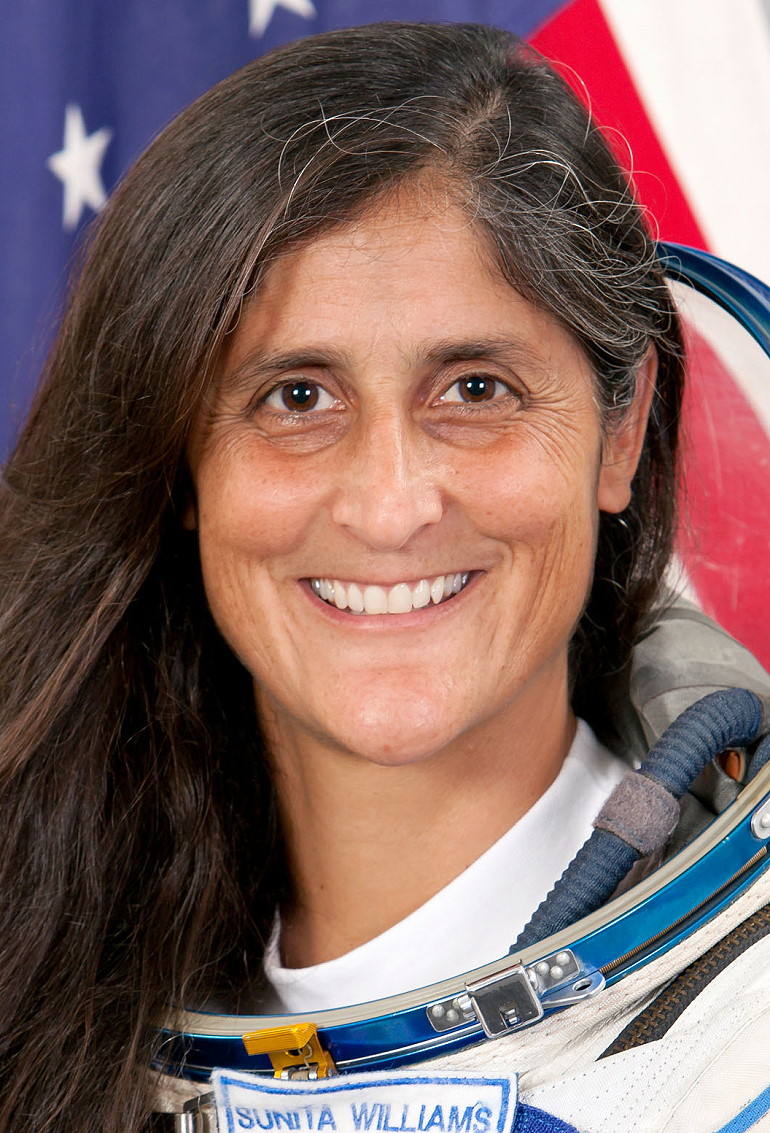
Sunita Williams despede-se da Estação Espacial

Sunita Williams despediu-se da ISS, onde permaneceu cerca de 6 meses, à medida que os astronautas do Space Shuttle Atlantis saíam da estação espacial, para se prepararem para o seu regresso à Terra.

Os problemas com os computadores de bordo parecem resolvidos - embora talvez seja ainda cedo para tirar conclusões definitivas. De qualquer forma seria impossível à Atlantis permanecer muito mais tempo atracada à ISS, devido à quantidade limitada de combustíveis e oxigénio que possui a bordo.

A despedida de Sunita - 'Sunni' para os amigos - foi algo sentimental, mas só ficou bem, porque esta gente vive mesmo para este sonho - o sonho de aprender a viver e a trabalhar no espaço. Um sonho que é essencial à sobrevivência da Espécie Humana. E passar 6 meses a bordo da mais avançada construção alguma vez realizada pela nossa espécie é, certamente, a experiência de uma vida. Uma experiência que, quase de certeza, não se repetirá para Sunita Williams.

Sunita Williams é agora a mulher com a mais longa permanência no espaço!

O Space Shuttle Atlantis deverá aterrar na quinta-feira, por volta das 6:54, hora de Lisboa.

Fonte: Email da CBS Space News

Link: mp3 da despedida de Sunita Williams da ISS (com várias interrupções, como seria de esperar)


10:15 AM, 6/18/07, Update: Williams bids tearful farewell to station

In her final daily planning conference with space station controllers in the United States and Russia, astronaut Sunita Williams, now the world's most experienced female space flier, bid a tearful farewell to her Russian crewmates, her American replacement - Clay Anderson - and the laboratory she's called home since last December.

"Houston, Moscow and Huntsville on (channel) 2, we're going to start the DPC a little bit early because I'm going to start it, Clay's going to finish it, or Clay, Fyodor (Yurchikhin) and Oleg (Kotov) are going to finish it without me," Williams radioed.

"Exploration isn't necessary or always logical," she said in a halting voice. "It's something that comes from inside each and every one of us. I believe we're all born with this curiosity called exploration. Human spaceflight is just one aspect of exploration, but it's the one that I've been intimately familiar with over the past six months.

"So I feel I can talk to how it affects thousands of people around the world who have worked on and still work on this amazing engineering and science project we call the international space station. These folks, along with their families, have dedicated their lives to ensure the success of the astronauts and cosmonauts (audio cutout) curiosity called exploration for the next generation.

"I'm saddened to say goodbye, but that means progress is being made and it's time for the international space station to grow a little more," Williams said, struggling to contain her emotions. "You and the ISS will always be a part of me as you are part of so many who will pave the way for our future."

She then beamed down a recording of James Blunt's "Goodbye My Lover:"

quarta-feira, 6 de junho de 2007

Lisa Nowak condecorada pela NASA!

A NASA atribuíu a Spaceflight Medal a Lisa Nowak, numa cerimónia que terá ocorrido ontem, mas de que ainda não tenho imagens - serão aqui colocadas assim que as tenha.

Há quem diga que é mau timing, por parte da NASA, condecorar uma astronauta que tem sobre si um processo crime por suposta tentativa de homicídio.

Também acho curioso a NASA condecorar uma astronauta que despediu pouco depois dos lamentáveis acontecimentos de Fevereiro.

Mas congratulo-me por este evento. Sou da opinião que a imprensa norte-americana tem explorado demais este caso, e que se a astronauta teve um bom desempenho na missão, o que se passou a seguir não tem nada a ver com o assunto.

Links:
Actualização: A medalha já tinha sido atribuída a Nowak em Agosto de 2006, a cerimónia de ontem terá sido só a entrega das medalhas. A foto abaixo foi, segundo sei, tirada em Agosto do ano passado.

sábado, 26 de maio de 2007

Segundo astronauta despedido da NASA

Bill Oefelein regressa à Marinha a partir de 1 de Junho.

Na sequência do triste caso de Lisa Nowak, que temos vindo a acompanhar neste blog, a NASA dispensou agora Bill Oefelein.

Apesar de não concordar com este tipo de decisão - afinal o que é da vida pessoal de cada um é de sua exclusiva responsabilidade, mesmo que se cometam ilegalidades - o facto é que após se ter decidido despedir Lisa Nowak, seria algo polémico, no mínimo, manter Bill Oefellein no quadro de astronautas da NASA.

O julgamento de Lisa Nowak continua marcado para Setembro.

Fonte: Orlando Sentinel


SCANDAL AT NASA


Boyfriend in Lisa Nowak astronaut love triangle ousted from NASA


Bill Oefelein's space career is ended by fallout from love triangle

Robyn Shelton
Sentinel Staff Writer

May 26, 2007

NASA is cutting ties with Bill Oefelein, the astronaut at the center of a love triangle that turned violent earlier this year.

The space agency announced Friday that Oefelein, an experienced test pilot and fighter pilot for the Navy, will be sent back to the military effective June 1.

Oefelein has admitted to being romantically involved with former astronaut Lisa Nowak, who is facing felony charges of attacking Oefelein's girlfriend in Orlando in February. Nowak, a Navy captain, already has been released from the astronaut corps and is working at a base in Texas.

A NASA spokesman would not discuss the end of Oefelein's space career, saying only that it is time for him to return to the Navy.

"The Navy and NASA mutually agreed to end his detail" with NASA, agency spokesman Jim Rostohar said at Johnson Space Center in Houston. "NASA determined his detail was no longer necessary."

Oefelein, 42, flew on shuttle Discovery in December and has been working at various technical assignments at JSC in recent months, Rostohar said.

His private life was dragged into public view after Nowak was accused of stalking and pepper-spraying Air Force Capt. Colleen Shipman on Feb. 5 in a parking lot at Orlando International Airport. Shipman is stationed at Patrick Air Force Base in Brevard County.

According to investigators, Oefelein had ended a romantic relationship with Nowak, who claims that she was only trying to talk with Shipman.

Nowak, whose trial is set for September, faces a possible life sentence on charges of attempted kidnapping and burglary with an assault. Military experts say Nowak and Oefelein also could be court-martialed on a charge of "conduct unbecoming an officer." Nowak is separated, and Oefelein is divorced.

A Navy spokesman would not say Friday where Oefelein, who holds the rank of commander, would be reporting to duty next week. Lt. Cmdr. Doug Gabos said the details still are being worked out. He would not comment on any disciplinary action that Oefelein might face.

"His case will be reviewed by his new commander, but we're not going to speculate on any possible outcome of his case," Gabos said.

A native of Alaska, Oefelein earned a bachelor's degree in electrical engineering from Oregon State University. He joined the Navy and earned his wings as a naval aviator in 1990. His early assignments included overseas deployments to the Persian Gulf as a fighter pilot.

After attending TOPGUN, the Navy Fighter Weapons School, Oefelein graduated in 1995 from the Navy's test-pilot school at Patuxent River, Md., where he later taught. In 1998, he was working as a strike-operations officer for a carrier wing in Virginia when he got the call telling him that he had been selected to join NASA's astronaut corps.

"A lot of folks who do that test-pilot work also went on to fly space shuttles," Oefelein said in an interview before his space voyage. ". . . at that point, it just seemed natural for me to go to the next phase and try to fly space shuttles."

During his 12-day mission in space, Oefelein and six crewmates helped rewire the electrical system aboard the international space station.

terça-feira, 15 de maio de 2007

Retretes no Espaço!

Não, em órbita não é assim...
Mike Mullane, no seu livro 'Riding Rockets', de que já falei neste blog, dedica várias páginas ao lado menos atraente das viagens no espaço - a higiene pessoal, com destaque para a retrete do Space Shuttle.

Não deve ser preciso pensar muito para pensar porque é que ir à retrete em órbita não será uma coisa própriamente agradável. Para já não há gravidade, o que faz com que as 'coisas' não caiam por si... a menos que sejam... aspiradas :P

Depois, pelos mesmo motivo, não se pode usar água como autoclismo... Aggghhh! Tem de se usar jactos de ar! E geralmente ficam bocados de fora, que têm de ser limpos com toalhetes!!! Aaaaaaaaaaaaaaaaggggggghhhhhh!!!!!!!!

Até há um treino, com uma camera de vídeo e um alvo, que os astronautas fazem para acertarem mesmo no... sítio, e ficar o menos possível de fora. Porque se ficar de fora, tem de se limpar com os tais toalhetes....... E quanto menos se tiver de meter as mãos na... porcaria, melhor!

Ninguém disse que ser astronauta era só vantagens!

Aqui está um artigo que nos fala deste aspecto menos agradável, mas vital, das viagens no espaço.

Fonte: BBC

Link:
NASA

Actualização 26 de Fevereiro de 2008 - veja também este artigo


How do you 'go' in space?

A tour of a space facility in the US apparently prompted Prince Philip to ask how astronauts deal with "natural functions" in space. So how exactly do they go to the toilet (or should that be the loo)?

It's all to do with air flow. On earth, in the West at least, your standard toilet is a water-flush affair, that takes waste and washes it down a pipe.


The lack of gravity on the shuttle and the space station mean a water-flush system is not an option. You don't need a particularly vivid imagination to see the potential problems.

Instead, on the shuttle, urine and faeces are carried away by rapid flow of air.

The unisex toilet resembles a conventional loo, but with straps over the feet and bars over the thighs to make sure that the astronauts don't drift off mid-go. The seat is designed so the astronaut's bottom can be perfectly flush to make a good seal.

The good news for fans of convenience is that, on the shuttle at least, urinating standing up is possible. A funnel-on-a-hose contraption is included so that astronauts - both male and female - can urinate standing up. Or sitting down if they prefer. They just attach it to the toilet using a pivoting bracket.

The system separates solid and liquid waste. Solids are compressed and remain on-board to be unloaded after landing. Liquids are released into space. Nasa hopes one day to recycle waste productively.

Researchers at the University of Guelph in Canada have said such recycling will be key to tackling any future mission to Mars in order to feed the astronauts.

The air used in the space shuttle's toilet system has to be filtered to get rid of the smell and bacteria before it is returned to the living area.

Incinerated waste

On the International Space Station, the fundamental principle is similar. The fan-powered air-flow toilet system stores waste. Urine is sucked up and stored in 20 litre containers which are dumped into the Progress resupply craft. The ship is later ejected into the atmosphere, where it burns up.

For solid waste, a plastic bag covered in holes is placed inside the toilet. Air is sucked through the holes so everything ends up in the bag. The elasticised top closes and the bag is pushed into a metal container. A new bag is popped in for the next visitor. Again the waste heads off to Progress.

Space toilets have come a long way. In the book The Right Stuff and its film adaptation, an astronaut on an early mission feels the need to urinate during a massively delayed take-off. With no facilities provided - and no adult nappies, as used today during take-off and landing - he is eventually allowed to urinate in his suit, causing his sensors to go haywire.

And Prince Philip is among good company in wondering how astronauts attend to their bodily functions.

A spokesman for Nasa confirms it is a question much asked by children and journalists alike.

KSC